Below is an excerpt of Palestine 1492: A Report Back, by Linda Quiquivix
One hundred years ago, almost nobody would have believed Europe would become the great defender of the Jews. A Jewish classmate once shared with me a tragic saying among Israelis who recognize this to be true: Jews had to leave Europe in order to become European.
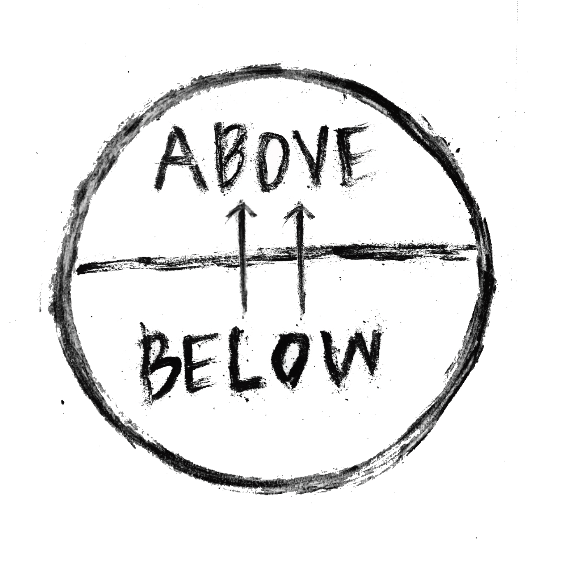
It is rational to join the side of the oppressor when empire offers that as the sole option for survival. To say it’s rational is to say it’s understandable; it’s not to say it is ethical. The wretched of the earth’s choice to help crush other wretched cannot be fully condemned without condemnation of the world that produces that choice, that produces a people as wretched, a people as condemned. The two choices are to go above or remain crushed below. It’s understandable to wish to assimilate, but a below still remains. Again, understandable but not ethical. An imbalance still remains, the trauma remains, the terror of falling remains, extermination remains, genocide remains. Resistance is an inevitability; it is to be expected, not condemned. But resistance is not the same thing as liberation.
The late Jewish liberation theologian, Marc Ellis, spoke of a shift in God’s role within Judaism following the Jewish Holocaust in the 1940s. The agonizing question for Jews since that time has been, How could God allow it? This trauma has been readily seized upon by Zionism with the promise that the State of Israel would never allow it, never again, at least not for Jews, because for Israel to protect Jews, it has to holocaust Palestinians, which is no protection at all for Jews. The Palestinian resistance to their own extermination is an inevitability, it is to be expected, not condemned. The agreement to serve empire is what is to be condemned. Empire itself is what is to be condemned.
Israel replaced God as an imposter protector; Zionism replaced God with the State. Gesturing to when the Roman Empire co-opted Christianity, Marc Ellis called Zionism a “Constantinian Judaism,”[1] a co-optation of Judaism on behalf of empire. Ellis fought for a Judaism from below almost alone in the United States until he died. The health of the resistance was weak while he was alive. He got to see only glimpses of it in his life, and may he get to see more in the next. Marc Ellis, presente.
Non-Europe is a place where Europe’s wretched can sometimes become protected as long as they help crush the resistance. The wretched of the earth doesn’t simply get to survive within empire, they have to make themselves useful to it. Not everybody is offered that chance, but those who are offered it regularly take it. How might we resist the decision to take it?
Israel is that kind of place where Jews can become White or White-adjacent if they can be useful, an offer that makes whoever accepts it inherently anti-Black. About how this plays out in the United States: it’s “the price of the ticket” as James Baldwin used to say.[2] James Baldwin, presente.
One hundred years ago, the resistances of non-Europe were debilitating Europe while, at the same time, the Europeans in Europe were eating at each other again. Europe’s implosion in the First and Second World Wars lost the neat Europe/non-Europe world map of Peace/War. Empire had to restrategize and reterritorialize, the beast had to grow new heads, heads of whatever color, religion, gender as long as they could be useful.
Desperate for an optics of redemption, a new principle of “Universal Human Equality” suddenly emerged within Europe at its newly created United Nations, the multicultural face of empire. Some of the below were invited now to a seat at the table, but only the ones Europe considered Human-adjacent enough, only the ones Europe could control.
In the framework of human rights today, the Human/non-Human split has since taken emphasis over the Europe/non-Europe split, even though in practice everyone can see the Human/non-Human of international law still maps onto the Europe/non-Europe of colonial law. The “Universal Human” standard itself was modeled by the European, meaning the non-European human is seen as inherently defective and needs to catch up, if the non-European human is seen as possibly human at all.
Frantz Fanon warned about trying to catch up to the oppressor in his final book, The Wretched of the Earth (1961), a book about going below, not going above. Everyone seems to reference that work, but not a lot of people can discuss more than its first two pages on violence, which means they miss the part about not becoming the monsters that we fight.
Fanon’s first book, which not enough people even pretend to read, speaks about the psychology of the wretched of the empire, although the book isn’t called that. It’s called Black Skin, White Masks (1952), originally entitled “Essay on the Disalienation of the Black.” The book had been Fanon’s doctoral dissertation before it was rejected by his French university. He had to write a new dissertation on another subject before They let him graduate.
Black Skin, White Masks discusses the psychological effects of dehumanization and anti-Blackness under colonialism, as Fanon himself experienced while studying psychiatry and medicine in France, as a Black colonized subject of France, from the Caribbean.
In Black Skin, White Masks, Fanon shows the internal and social turmoil Black colonized subjects undergo under conditions of dehumanization and the incentives they believe they will acquire by speaking like a European, dressing like a European, acting like a European, impossible in the end because Black skin turns out to be the border of who’s allowed to be a European, of who’s allowed to be a Human according to the European.
Since the decolonization movements of the 1950s, 1960s, and 1970s, Europe launched an optics of redemption and reterritorialization. Europe is no longer contained to Europe or to the European. One can even leave Europe to become a European.
But Israel is not a place Jews go to become fully European. Israel doesn’t let anyone forget the “wretched” part of Jewish history that empire says it is redeeming, “the worst crime against Humanity” as they call it, since the crime happened in Europe. Europe’s holocausts in non-Europe it doesn’t consider to be crimes.
The part of Jewish history preserved as “wretched” allows for empire’s redemption and much as it does for its deflection. Criticism of Israel’s imperial errands, for example, are accused of being anti-Semitic by anti-Semites themselves, accused of being the Devil by the Devil himself, an accusation that’s only effective when one doesn’t know what’s going on, and admittedly, not a lot of people know what’s going on.
Israel knows that empire as the great defender of Jews might not always be the case, as empire doesn’t care first about identity; empire cares first about preserving itself. Israel is for empire today its post-Holocaust redemption. And even Palestine might be its post-Israel redemption once Israel stops being so useful and if Palestinians were to accept that agreement, and there is no shortage of Palestinians who would accept that agreement. There is no shortage of any of us who would accept that agreement.
We must be cautious, and we must not forget, one hundred years ago almost nobody would have believed Europe would become the great defender of the Jews. Empire regularly changes its face so that it can remain the same.
This has been an excerpt of Palestine 1492: A Report Back, by Linda Quiquivix
Footnotes
[1] Marc Ellis, Toward a Jewish Theology of Liberation (Baylor University Press, 2007); also see Sara Roy, “Remembering Marc Ellis” Contending Modernities (July 31, 2024)
[2] James Baldwin, The Price of the Ticket: Collected Nonfiction 1948–1985, (St. Martin’s Press, 1985)